
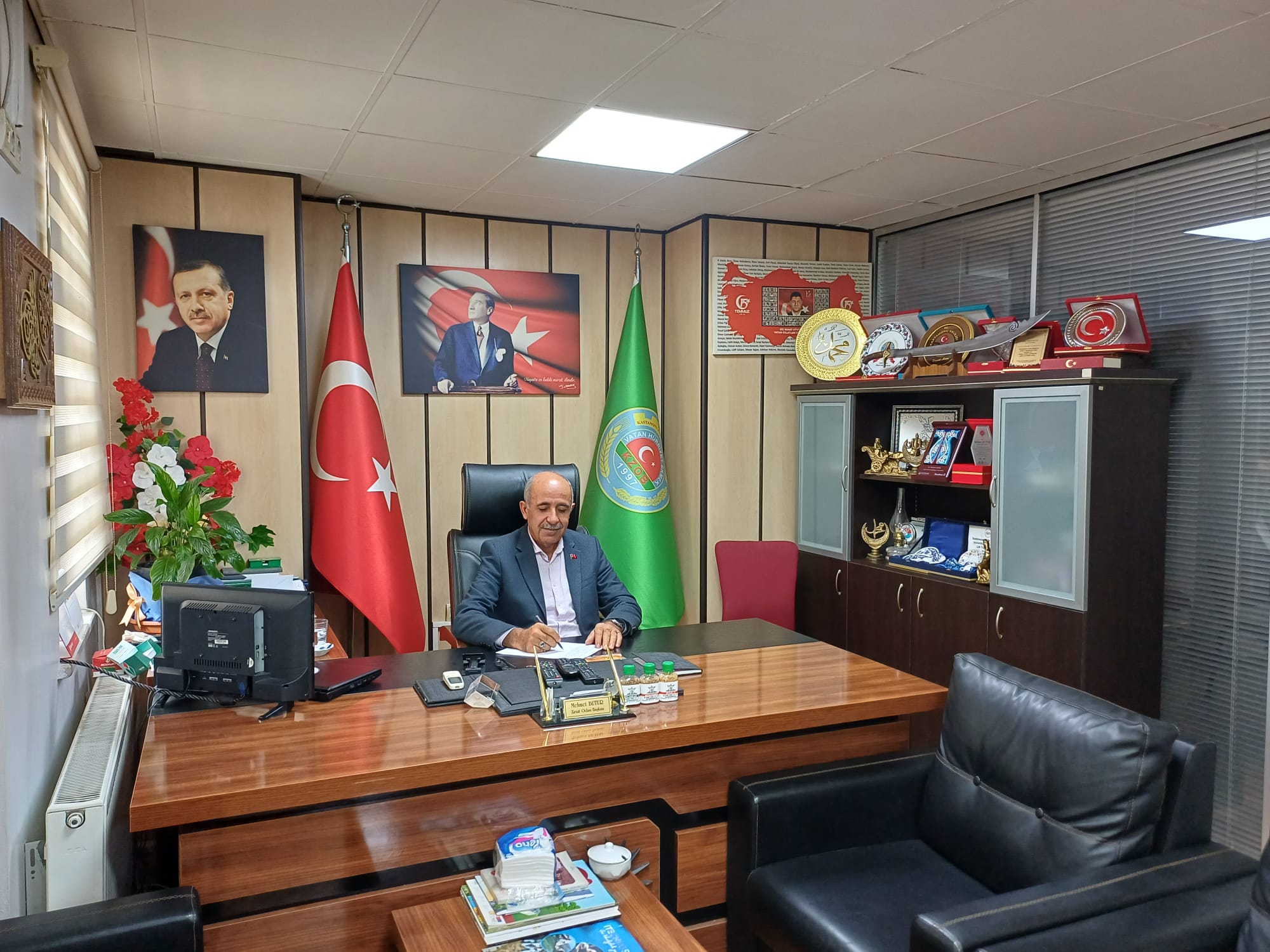
Geçmişi 10 bin yıl öncesine dayanan, “buğdayın atası” olarak bilinen siyez buğdayı, Anadolu’nun en kıymetli tarım miraslarından biri olarak günümüze ulaşmayı başardı. Kastamonu’nun bereketli topraklarında doğal koşullarda, ilaçsız ve gübresiz yetişen siyez; düşük glüten oranı, yüksek lif ve antioksidan değeriyle son yıllarda sağlıklı beslenme trendlerinin gözdesi haline geldi.
Kastamonu Ziraat Odası Başkanı Mehmet Butur ile yaptığımız bu söyleşide; siyez buğdayının özelliklerini, coğrafi işaret sürecini, çiftçiye ve bölgeye kattığı değeri, ayrıca gelecek için taşıdığı potansiyeli konuştuk.
Öncelikle sizi tanıyabilir miyiz? Ve Siyez Buğdayı ile ilgili yaptığınız çalışmalardan söz eder misiniz?
Ben Kastamonu Ziraat Odası Başkanı Mehmet Butur. Aynı zamanda çiftçilik yapıyorum. Üçüncü dönemdir Ziraat Odası Başkanlığı görevini sürdürüyorum. Kastamonu’nun en değerli tarımsal ürünlerinden biri olan siyez buğdayının coğrafi işaretini de biz Ziraat Odası olarak aldık. Ayrıca siyez bulgurunun da coğrafi işaretini odamız tescil ettirdi.
Siyez buğdayı nedir, neden önemli?
Siyez buğdayı, geçmişi 10 bin yıl öncesine dayanan, genetiği hiç değişmemiş, atalık bir tohum.
“Hitit buğdayı” olarak bilinen siyez, dünyadaki ilk buğday çeşidi. Yöremiz için çok önemli bir ürün. İhsangazi ilçesinde yaklaşık 16 bin dekar alanda ekiliyor. Hem iç piyasada hem de dış piyasada yoğun talep görüyor. Hatta öyle ki siparişleri daha hasat edilmeden alınıyor, adeta yok satıyor.
“Kabulca” veya “kaplıca” olarak da bilinen siyez, günümüzde adı sıkça duyulan, ilaçsız ve gübresiz doğal ortamda yetişebilen bir buğday türü. 14 kromozom sayısıyla genetik olarak yeryüzündeki ilk buğday türü olarak kabul ediliyor. Günümüze kadar Kastamonu’da korunarak yetiştirildi ve en çok İhsangazi, Seydiler ve Devrekâni ilçelerinde üretimi yapılıyor.
Siyez buğdayının özellikleri nedir?
Siyez hem sağlık hem de lezzet açısından çok değerli bir buğday. Glüten oranı çok düşük, lif oranı ve antioksidan değeri ise yüksek. Şeker hastaları ve obezite riski taşıyan kişiler için oldukça sağlıklı bir gıda. Ben de bir şeker hastası olarak evimde siyez bulguru tüketiyorum.
Buğdayın atası olarak bilinen siyez, hem sağlığı hem de lezzetiyle geleceğin temel gıdalarından biri olacak. Kastamonu’da yetişiyor olması bizim için büyük bir şans. Üretim alanlarının her geçen yıl artırılması gerekiyor. Son zamanlarda ulusal düzeyde daha çok gündeme gelmeye başladı. Ben inanıyorum ki, geleceğin temel gıdası haline gelecek.
Siyez ile bulgur arasındaki fark nedir?
Siyez kabuklu bir buğdaydır. Önce kaynatılır, sonra kabuğu soyulur ve kurutulur. Ardından su değirmenlerinde kırılır. Böylece siyez bulguruna dönüşür. Yani siyez ham madde, bulgur ise işlenmiş hali diyebiliriz. Ayrıca siyez unundan ekmek de yapılabiliyor. Ancak glüten düşük olduğu için uzun süre saklanmaz, taze tüketilmesi gerekir.
Siyez buğdayı hasat edildikten sonra nasıl saklanıyor? Saklama koşulları ve süresi buğday ile benzer mi?
Elbette buğday gibi kapalı, nemsiz ve karanlık ortamlarda saklanabiliyor. Ancak burada en önemli nokta rutubet. Eğer rutubetli bir ortamda saklarsanız dayanmaz. Öncesinde mutlaka kurutulması gerekiyor. Yani hasattan sonra ya güneşte kurutulmalı ya da geç hasadı yapılmalı. Doğru şartlarda saklandığında yıllarca dayanır.
Peki siyez buğdayının hasadı ne zaman yapılıyor?
Diğer buğdaylara göre biraz daha geç olgunlaşıyor. Normal buğdayların hasadı genellikle Ağustos’un başında yapılırken, siyez buğdayının hasadı 15 Ağustos civarında başlıyor. Yani yaklaşık 15 gün sonra olgunlaşıyor diyebiliriz.
Siyez buğdayı hangi topraklarda daha verimli yetişiyor?
Genelde kıraç toprakları seviyor. Taban arazilerde pek iyi olmaz çünkü sapı çok narindir, hemen yatar. Daha güneşli, kıraç arazilerde daha verimli ve dayanıklı oluyor.
Siyez buğdayına gösterilen ilgi sizce neden artıyor?
Sağlık sebepleri büyük rol oynuyor. İnsanlar artık pirinç tüketmekten çekinir hale geldi. Şeker hastalığı ve obezite riskleri, insanları doğal yiyeceklere yöneltiyor. Bu yüzden siyez bulguruna olan yönelim artıyor. Bu durum Kastamonu için çok büyük bir fırsat. Son dönemlerde siyeze gösterilen ilgi bizim için son derece kıymetli. Siyezimize sahip çıkmamız gerekiyor.
Siyez Buğdayı ne zaman coğrafi işaret aldı?
Kastamonu Ziraat Odası, 04.01.2019 tarihinde T.C. Türk Patent ve Marka Kurumu’na yaptığı başvuru sonucunda “Kastamonu Siyez Buğdayı Coğrafi İşaret Belgesi”ni 01.10.2020 tarihinde almıştır. Bu belge, 86 sayılı Resmî Coğrafi İşaret ve Geleneksel Ürün Adı Bülteni’nde yayımlanarak odamıza teslim edilmiştir.
Belgenin alınmasında katkılarından dolayı Kastamonu Tarım ve Orman İl Müdürlüğü’ne ve Kastamonu Üniversitesi Mühendislik ve Mimarlık Fakültesi Öğretim Üyesi Sayın Servet Kefli’ye burada bir kere daha teşekkür ederiz.
Kastamonu’da siyez en çok nerelerde yetiştiriliyor?
En yoğun üretim İhsangazi ilçemizde. Ama biz coğrafi işareti tüm Kastamonu için aldık. Toplamda 20 ilçemizin tamamı bu kapsama giriyor. Siyez özellikle kıraç topraklarda daha verimli yetişiyor. Ağustos’un ortalarında hasat ediliyor. Diğer buğdaylara göre yaklaşık 15 gün daha geç olgunlaşıyor.
Çiftçiler için siyez ekimi ekonomik açıdan nasıl bir katkı sağlıyor?
Çiftçilerimiz hem kendi tüketimleri için ekiyor hem de satış yaparak gelir elde ediyorlar. Bu anlamda bölgesel kalkınmaya da ciddi katkısı var. Biz de Ziraat Odası olarak her platformda siyezden bahsediyor, tanıtımını yapıyoruz. Çünkü coğrafi işaretli ürün demek, bu topraklara özgü, başka yerde olmayan bir ürün demek.
Siyez bulguru yurt dışına da gidiyor mu?
Evet, yurt dışına da satış var ama henüz çok yaygın değil. İç piyasada daha çok tüketiliyor. Avrupa’da özellikle sağlıklı beslenmeye önem veren ülkelerden ilgi var. Bizim Kastamonu’da da artık fabrikasyon üretime geçildi. Yaklaşık 5-6 tesis siyez işleyip paketleyerek piyasaya sunuyor.
Siyez dışında Kastamonu’nun öne çıkan diğer ürünleri neler?
Sarımsağımız çok önemli. Hatta hem Türkiye’de hem de Avrupa Birliği’nde coğrafi işaret tescili aldı. Ancak bir sıkıntımız var: başka illerde üretilen düşük kaliteli sarımsaklar “Kastamonu sarımsağı” adıyla satılıyor. Bu hem tüketiciyi yanıltıyor hem de bizim marka değerimize zarar veriyor. Biz bu konuda gerekli mercilere taleplerimizi iletiyoruz.
Son olarak eklemek istediğiniz bir şey var mı?
Siyez buğdayı bizim için sadece bir ürün değil, tarihten gelen bir miras. Bu mirasa sahip çıkmamız gerekiyor. Ben odamda her zaman üreticilerimize kapımı açık tutuyorum. Üreticimizi desteklemek ve Kastamonu’nun tarımsal değerlerini duyurmak için çalışmaya devam edeceğiz.
10,000 YEARS OF HERITAGE: SIYEZ WHEAT (EINCORN)
Siyez wheat, known as the “ancestor of wheat” and dating back 10,000 years, has survived as one of Anatolia’s most valuable agricultural heritages. Grown naturally without pesticides or fertilizers in Kastamonu’s fertile lands, siyez has recently become a favorite in healthy eating trends due to its low gluten content and high fiber and antioxidant levels.
In this interview with Mr. Mehmet Butur, President of the Kastamonu Chamber of Agriculture, we discussed the characteristics of siyez wheat, its geographical indication process, the value it brings to farmers and the region, and its potential for the future.
Could you tell us a bit about yourself and what kind of projects you’ve carried out with siyez wheat?
I am Mehmet Butur, President of the Kastamonu Chamber of Agriculture, and also a farmer myself. This is my third term as president. Our chamber obtained the geographical indication for siyez wheat, one of Kastamonu’s most distinctive agricultural products. Additionally, we registered the geographical indication for siyez (einkorn) bulgur.
What exactly is siyez wheat, and why is it important?
Siyez wheat is an ancient, heirloom grain whose genetics have remained unchanged for around 10,000 years. Known as “Hittite wheat,” it is considered the world’s first wheat variety and holds great importance for our region. Around 16,000 decares in the İhsangazi district are cultivated with siyez wheat. It enjoys high demand both domestically and internationally, with orders often placed even before the harvest.
Also referred to as “kabulca” or “kaplıca,” siyez grows naturally without the use of pesticides or fertilizers. With 14 chromosomes, it is genetically recognized as the first wheat species on Earth. It has been preserved and cultivated for centuries in Kastamonu, particularly in the districts of İhsangazi, Seydiler, and Devrekâni.
What are the key characteristics of siyez wheat?
Siyez wheat is highly valuable for both health and taste. Its gluten content is very low, while fiber and antioxidant levels are high. It is especially beneficial for people with diabetes or at risk of obesity. I personally consume siyez bulgur at home as a diabetic.
Known as the “ancestor of wheat,” siyez is poised to become a staple food of the future due to its health and taste. Growing it in Kastamonu is a great advantage, and cultivation areas should continue to expand. Recently, it has gained more attention on a national scale, and I firmly believe it will become a key food in the future.
What is the difference between siyez wheat and bulgur?
Siyez wheat is a hulled wheat variety. It is first boiled, then the hull is removed and the grain is dried. Afterwards, it is cracked in water mills, turning it into siyez bulgur. In other words, siyez wheat is the raw material, while bulgur is its processed form. Siyez flour can also be used to make bread; however, because its gluten content is low, it doesn’t keep for long and should be consumed fresh.
How is siyez wheat stored after harvest? Are the storage conditions and shelf life similar to common wheat?
Siyez can be stored like ordinary wheat, in enclosed, dry, and dark conditions. The critical factor is moisture: if stored in a humid environment it will spoil. The grain must be thoroughly dried before storage, either by sun-drying after harvest or by delaying the harvest until the grain is naturally drier. When stored under the right conditions, siyez can keep for many years.
What is the usual harvesting period for siyez wheat?
It matures a little later than other wheat varieties. While common wheat is usually harvested at the beginning of August, siyez wheat harvesting starts around August 15. In other words, it ripens about two weeks later than common wheat.
In what type of soil does siyez wheat grow most efficiently?
It generally thrives in dry, non-irrigated lands. It doesn’t perform well in lowland fields because its stalks are very delicate and tend to lodge easily. Siyez grows more efficiently and remains more resilient in sunny, arid areas
Why do you think siyez wheat is gaining popularity?
Health concerns play a major role. People have become more cautious about consuming rice, as the risks of diabetes and obesity are driving them toward more natural foods. As a result, demand for siyez bulgur has been rising. This is a great opportunity for Kastamonu. The growing interest in siyez in recent years is extremely valuable for us, and we must do our best to protect and promote our local variety.
When did siyez wheat receive its geographical indication?
The Kastamonu Chamber of Agriculture applied to the Turkish Patent and Trademark Office on January 4, 2019, and was granted the “Kastamonu Siyez Wheat Geographical Indication Certificate” on October 1, 2020. This certificate was published in the Official Bulletin of Geographical Indications and Traditional Product Names, issue number 86, and delivered to our chamber.
We would like to once again thank the Kastamonu Provincial Directorate of Agriculture and Forestry and Professor Servet Kefli from Kastamonu University’s Faculty of Engineering and Architecture for their valuable contributions to obtaining this certificate.
Where is siyez wheat mainly grown in Kastamonu?
The highest production is in our İhsangazi district, but the geographical indication covers the entire Kastamonu province, all 20 districts are included. Siyez grows especially well in dry, non-irrigated lands. It is harvested in mid-August and matures about two weeks later than common wheat.
What economic benefits does cultivating siyez wheat bring to farmers?
Our farmers grow it both for their own consumption and for sale, providing an additional source of income. In this way, it also makes a significant contribution to regional development. As the Chamber of Agriculture, we promote siyez on every platform because a product with a geographical indication means it is unique to these lands, a product that cannot be found elsewhere.
Is siyez bulgur exported abroad as well?
Yes, there are sales abroad, but it is not yet very widespread. Most consumption still takes place in the domestic market. In Europe, there is particular interest from countries that prioritize healthy eating. In Kastamonu, production has now also shifted to a factory-based system, with around five to six facilities processing and packaging siyez for the market.
Apart from siyez, what are Kastamonu’s other prominent products?
Our garlic is very important. In fact, it has received geographical indication registration both in Turkey and within the European Union. However, we face a challenge: low-quality garlic produced in other provinces is sometimes sold under the name “Kastamonu garlic.” This misleads consumers and harms our brand value. We continue to communicate our concerns to the relevant authorities.
Finally, is there anything else you would like to add?
Siyez wheat is not just a product for us; it is a heritage passed down from history. We must preserve this legacy. I always keep my office open to our producers. We will continue working to support our farmers and to promote Kastamonu’s agricultural values.